
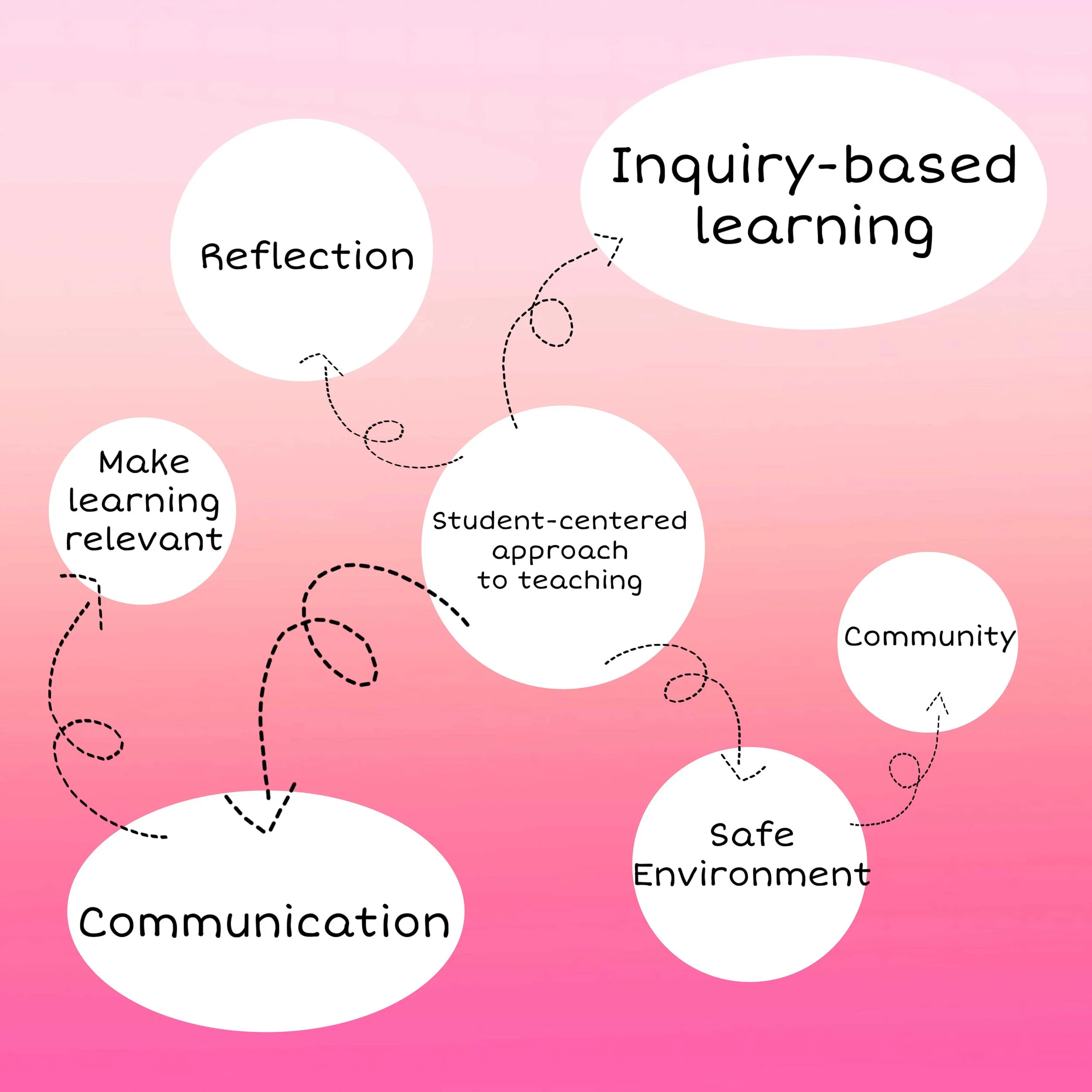
My teaching philosophy is rooted in clear expectations, playful exploration, and thoughtful creative risk-taking. I use project-based learning and set concise, attainable goals that give students a reliable structure while still leaving room for personal inquiry. Lessons move from big ideas to small ideas, and the structure is always the same. I begin every class by telling students exactly what we’ll be doing so everyone knows what to expect. We often start with a creativity warm-up, followed by guided discussion (because we have to practice being imaginative), then research and clear benchmarks so students understand the “why” behind their work.
I build in time for brainstorming, ruminating, and sketching so students have a vision to refer back to. Planning and breaking down an artwork is a valuable skill in itself, and sketching is a vital part of my own practice. I give short, frequent demos that show the “how,” so students can ask questions and immediately apply what they see.
Within this structure, I strongly encourage experimentation: materials, mark-making, and conceptual variations are all invitations to discover unexpected outcomes. I provide examples, but more importantly, I provide time for play. Warm-ups and work time are both forms of guided play. I take a student-centered approach by listening, observing, and adapting so each learner’s interests help shape their projects. This balance between structure and play builds autonomy, resilience, and confidence, while creating a classroom community where students feel safe to explore and know they will be heard.
Thoughtful risk-taking is essential. I work to create a culture where mistakes are seen as productive experiments and iteration matters more than immediate perfection. Creativity is a skill that requires practice, and my classroom is a place to build that skill. Critique is constructive and kind, focused on both growth and success. Ultimately, my goal is to equip students with skills, curiosity, and the courage to pursue original ideas, so they leave not only more capable but also more willing to explore their own creative paths.
Teaching
Youth Ceramics
I have designed and teach a 10-week course at Art Works Now located in Hyattsville, MD that teaches elementary school children how to hand-build with clay, introducing basic techniques, safe studio habits, and simple glazing methods. During the very first class students take a questionnaire asking “What do YOU want to make?” I build my course around the results, making every semester unique with different groups of students voting on and completing varied projects. I make sure to scaffold the learning, building from the knowledge we gained from one project onto the next. I leave lots of room for the natural variability of ability amongst children, especially as fine motor skills are still developing. I always encourage students to push themselves out of their comfort zone and be as creative as possible in every sculptural adventure we undertake. I’ve previously taught clay sculpting to younger children at Abrakadoodle art camp in Bethesda, MD.
Experience the full course through the slide show. I outline the class structure and expectations, create creativity warm-ups, guide discussions, present demonstrations, and encourage reflections every week.
Watch the immense progress students had over the course of the Fall 2025 semester. We completed five projects: pinch pots, mugs, relief tiles, boxes, and animal sculptures.
Portraiture and Figure Drawing
I’ve designed and teach a 12-week course for the Young Masters Program at the Compass Atelier in Kensington, MD. I’ve also taught multiple “Introduction to Figure Drawing” workshops throughout the DMV area.
I care deeply about making my students feel seen, heard, safe, and comfortable. Talking about the portrayal of bodies and faces isn't easy and can bring up a lot of emotion: sometimes trauma or deep-rooted misconceptions, beliefs, systemic injustices, and societal pressures. I always ensure that when I teach figure drawing and portraiture I encourage diversity and self-love, and provide the tools and supportive environment where everyone can be proud of themselves, their identities, and where they come from. This is a presentation I made for one of my art education courses at UMD about “Encouraging Diversity In Portraits and Artworks” describing actions teachers can take for the well-being of the young artists they are working with.
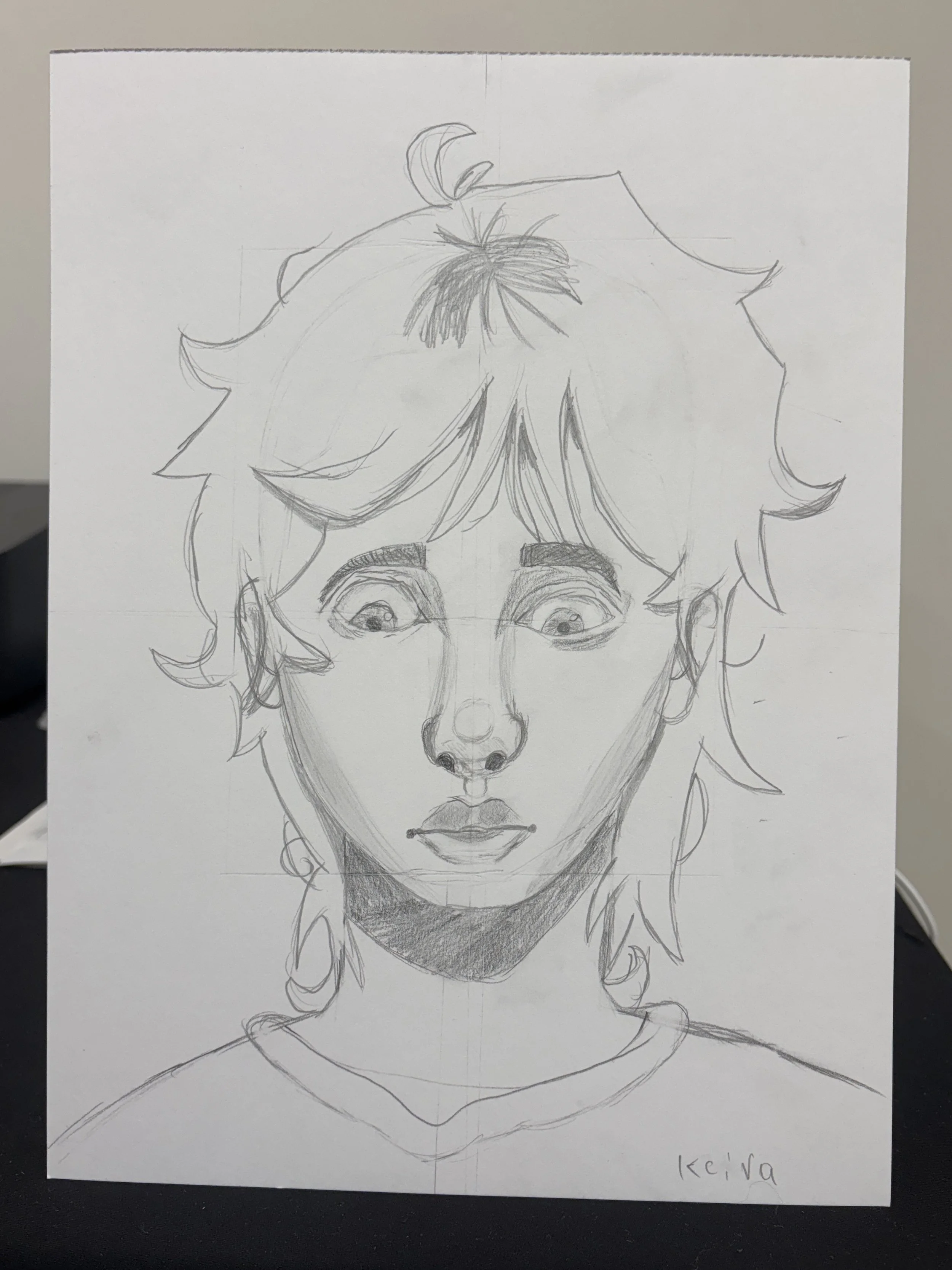
As an artist, to depict faces you have to pay attention to difference and variety. Hooded eyes and monolids are approached differently. Coiled, wavy, and straight hair require distinct marks, just as thin lips versus full lips, or a hooked nose versus a button nose, call for careful observation.
Before starting, I asked students why portraiture matters and why we draw people. They named a wide range of reasons: capturing history, storytelling, power, exploring emotion, fun, and making memories. I then introduced basic facial proportions. Together, we mapped the head and placed the features, briefly looking at how lighting affects shadows.
I demonstrated a range of eye shapes, nose types, and hair textures so students could see how subtle differences create a likeness. We worked feature by feature, building linework and then shading one area at a time. Between short, frequent demos, I walked around to check in, answer questions, and support students.
This portrait drawing lesson took two hours, spanning two classes. I love the personality that comes through in each drawing.
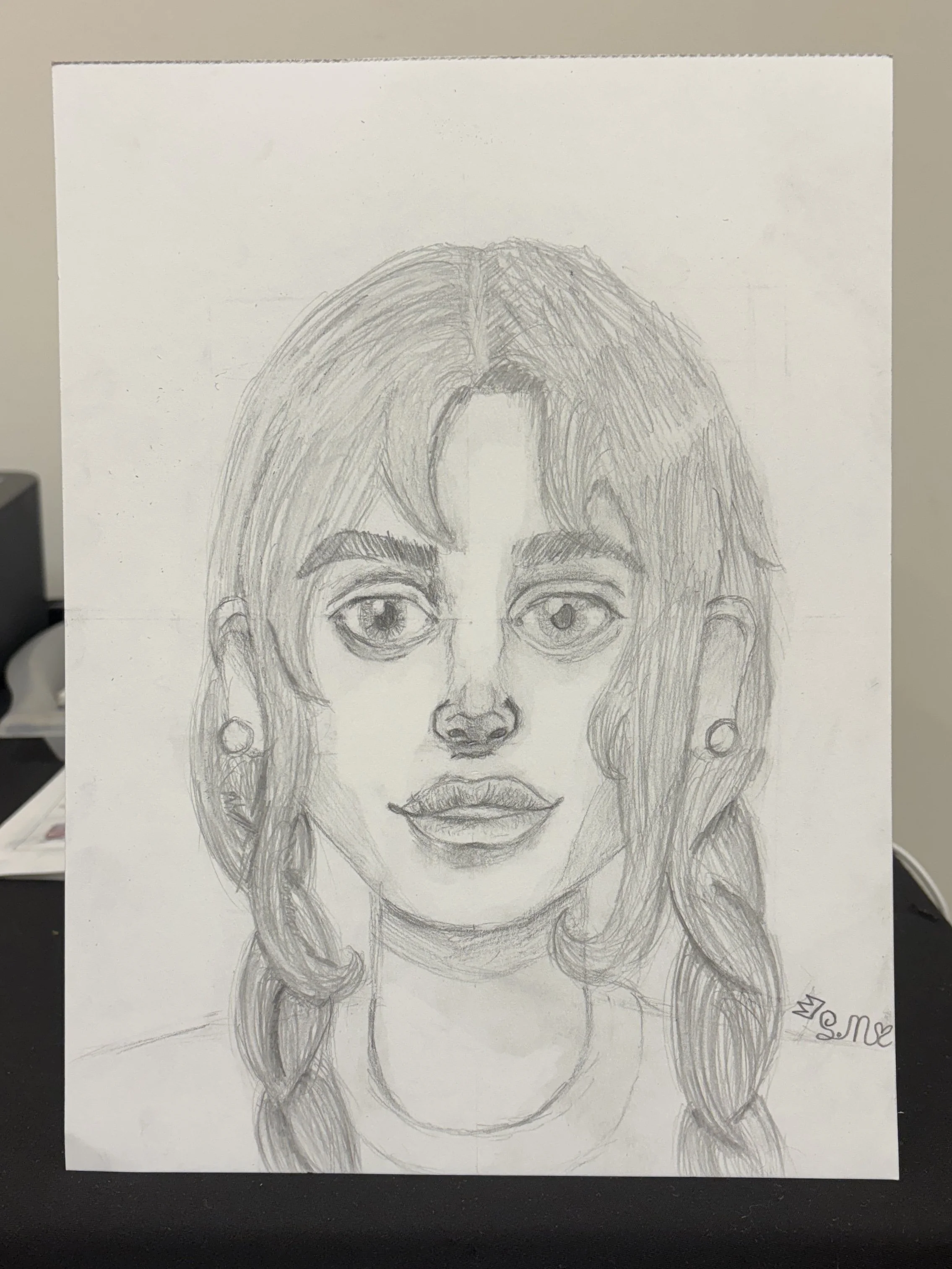
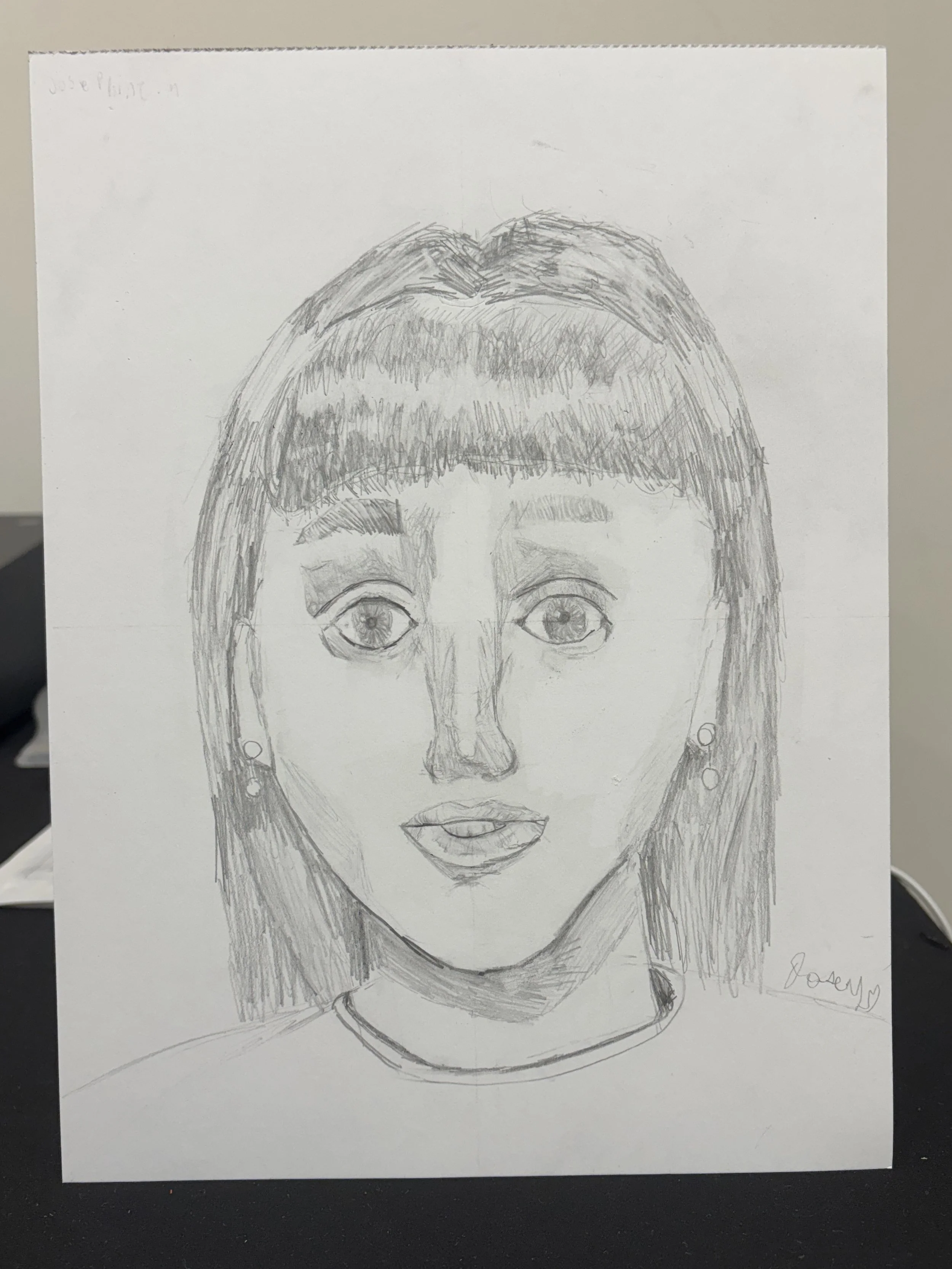
10-13 year old portraits in graphite, exploring 6B to 6H pencils.
Painting
I’ve been teaching how to paint for about two years. I’ve taught 50+ paintings in acrylics and recently have started teaching “Introduction to Oil Painting” workshops. I’ve taught at Muse Paintbar,The Carnegie at Washingtonian Center, and at the Artists on Market Gallery, all located in Gaithersburg, MD.
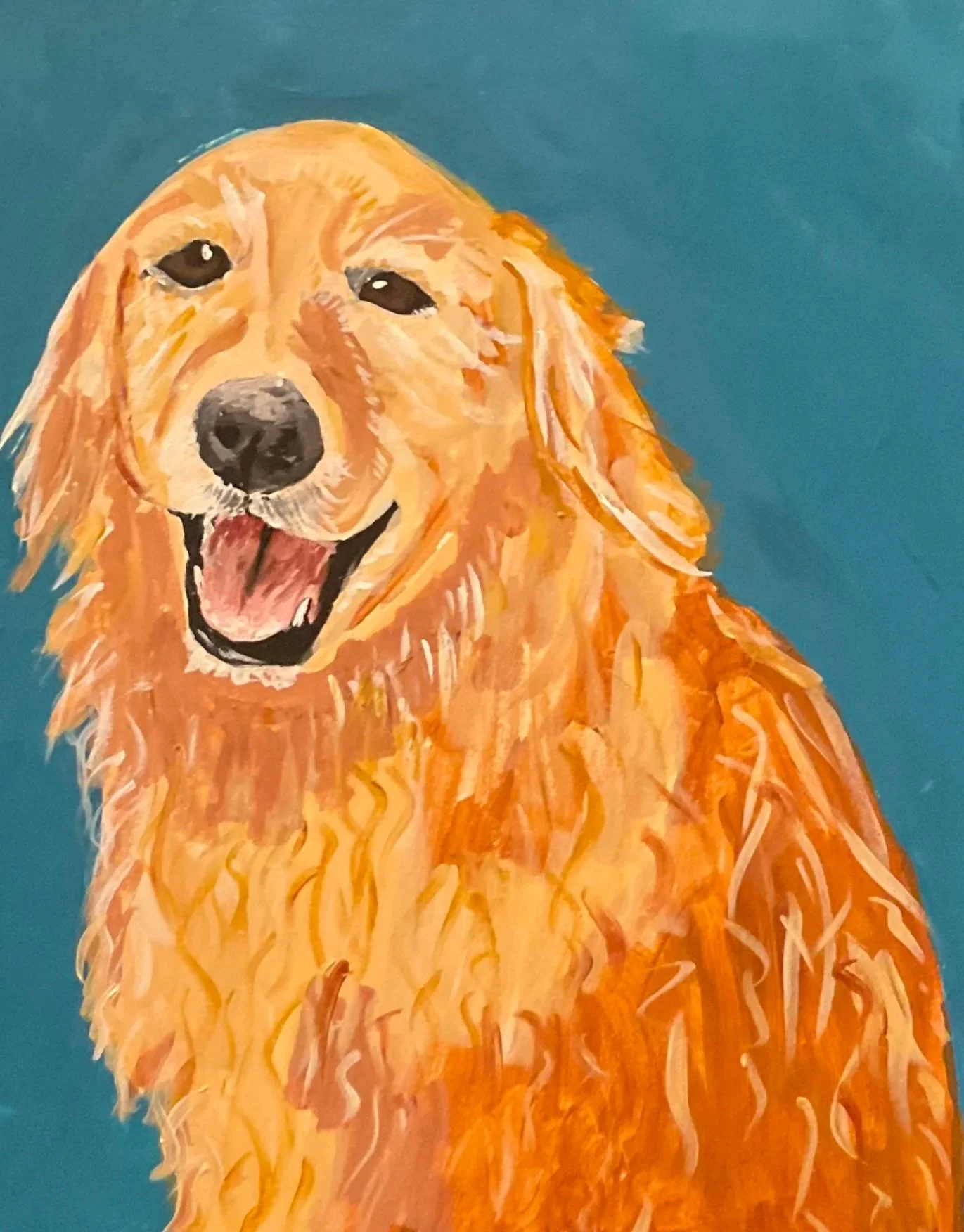
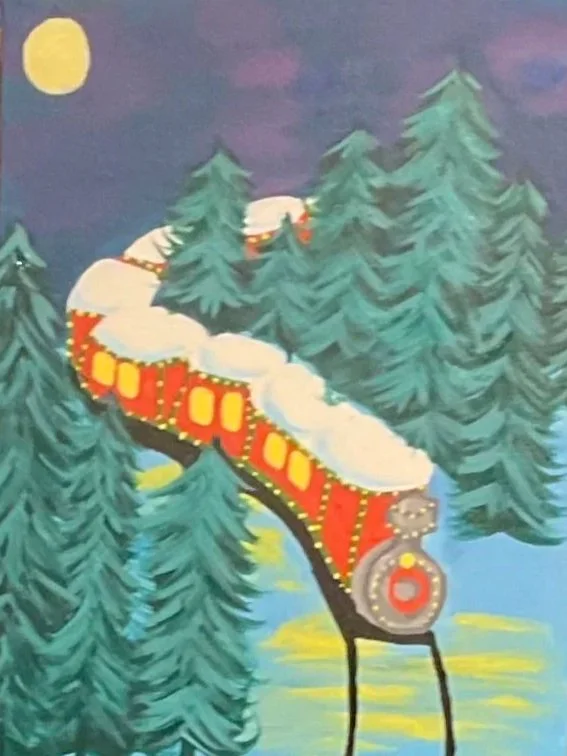
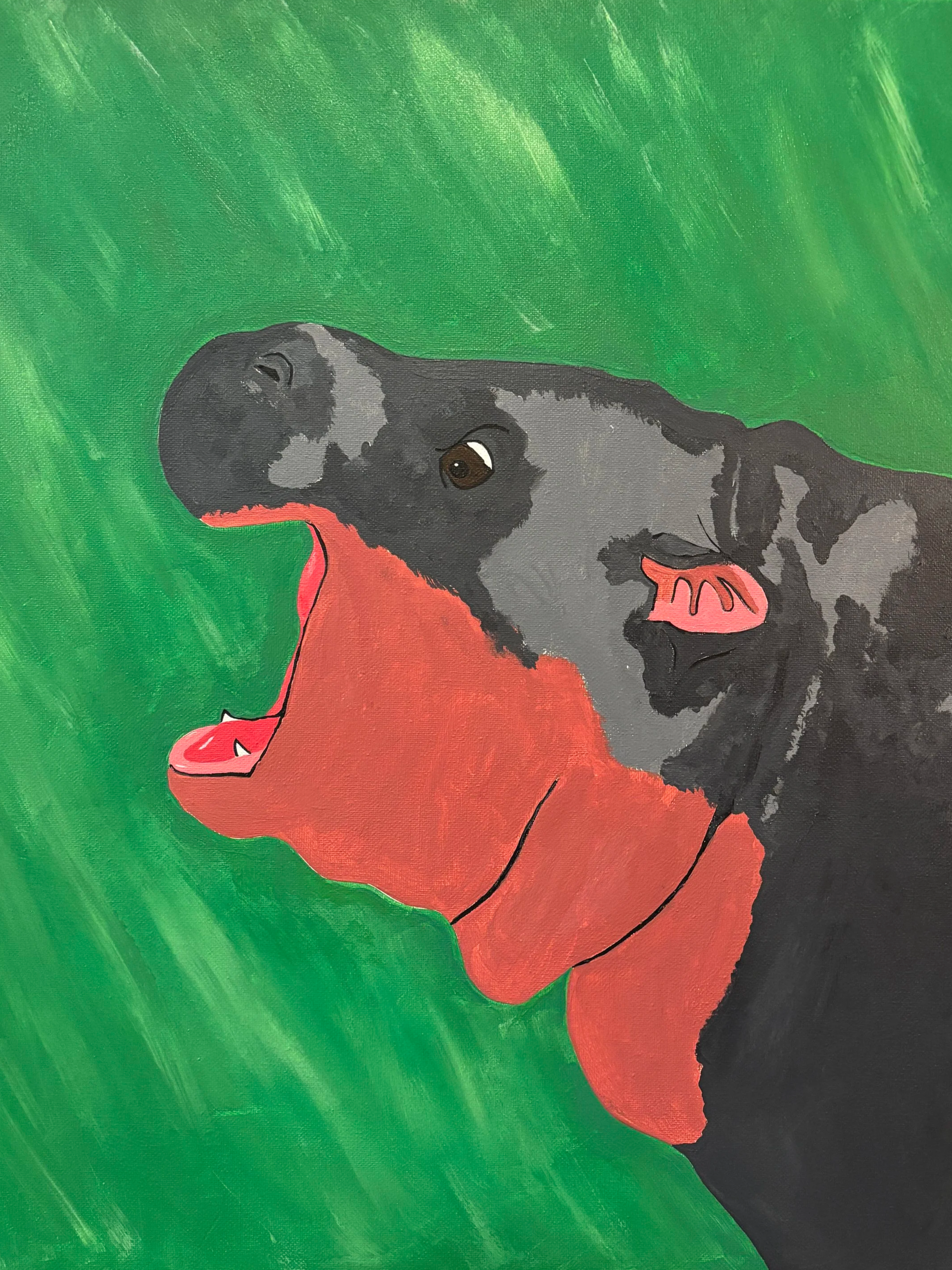
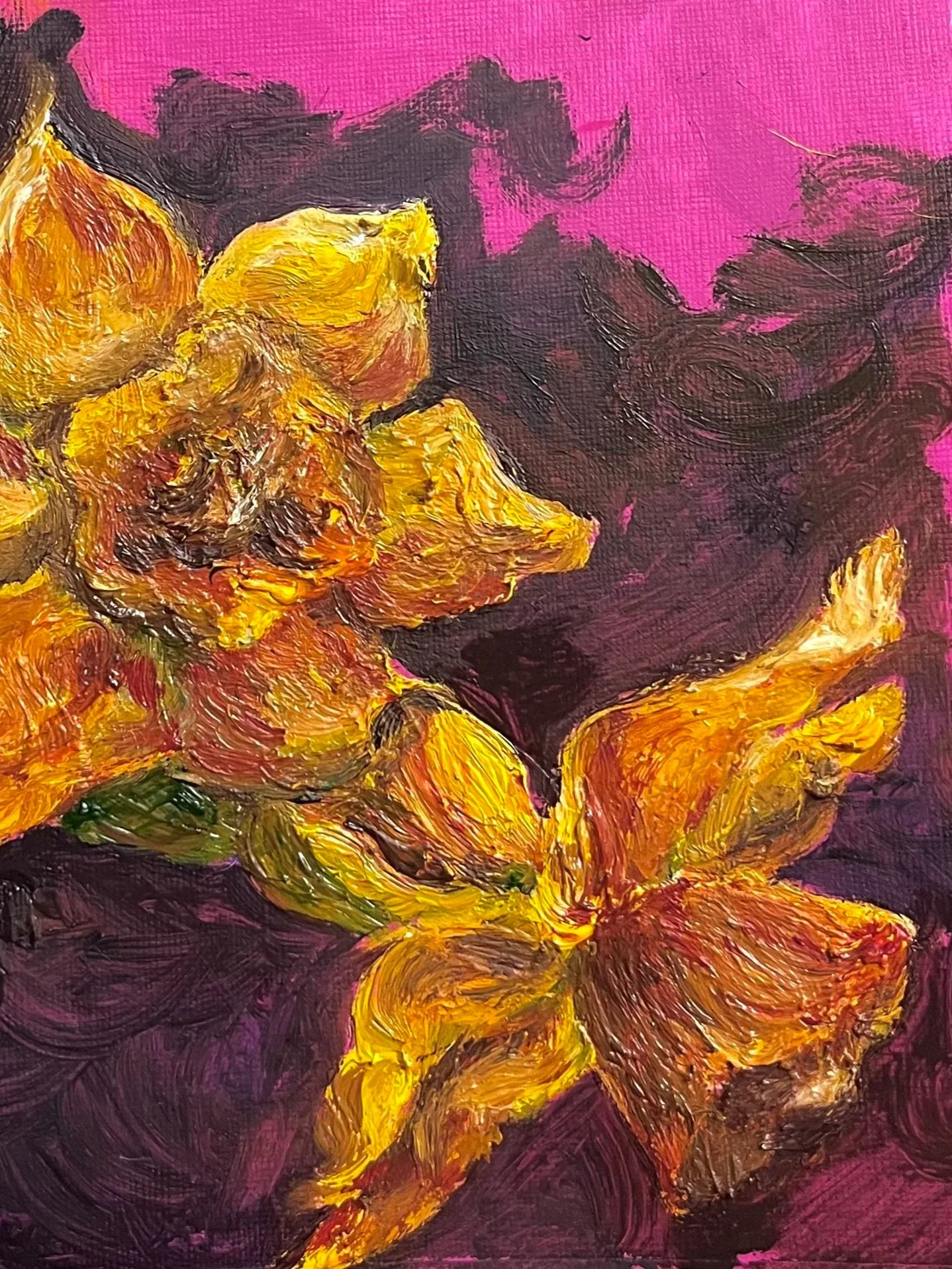
Adult student work, with a range of prior knowledge and practice.